
Are you tried grooming your cat and felt like you were in a wrestling match? I sure have. Learning how to restrain a cat for grooming saved my arms and my sanity. At first, I had no idea what I was doing. My cat would hiss, squirm, and bolt the second I pulled out the brush. But I picked up a few smart, gentle cat restraint techniques that actually worked. I’ll walk you through them and show you the best types of cat restraints I’ve used. No stress, no drama. Just real tips from someone who’s been through it.
The safest way to restrain a cat for grooming is to use gentle techniques that reduce stress while preventing sudden movements. A towel wrap, calm handling, or a grooming bag can make brushing, nail trimming, and cleaning safer for both you and your cat.
Let’s get started and make grooming easy for you and your cat. Here is a complete guide on how to Restrain Cat for Grooming. Just follow the simple tips.
Why Proper Cat Restraint Matters During Grooming
Proper restraint also lowers the risk of stress-related injuries. A frightened cat may twist suddenly, jump from a table, or scratch while trying to escape. Gentle restraint reduces these risks and helps grooming become a more positive experience over time.
When I first groomed my rescue cat, Mona, I had no clue what I was doing. She hissed, scratched, and ran. I felt lost. I didn’t want to hurt her or make her scared of me. But I knew I had to find a way. That’s when I learned a few cat restraint techniques that changed the game.
The right hold keeps your cat calm. Cats don’t like chaos. Loud sounds and fast moves can stress them out. If they panic, they may scratch or bite. A gentle hold can stop that panic before it starts.
I tried the towel wrap first. Luna stayed still, and I was able to trim her nails. It felt like a win. I didn’t need force—just care and calm hands.
Good restraint is not rough. It’s soft, safe, and full of love. It helps your cat feel safe. And it helps you feel in control, without fear or guilt.
Best Cat Restraint Techniques (Step-by-Step)
Need help grooming your cat? These safe tricks can keep your cat calm and still. No more stress. No more scratches.
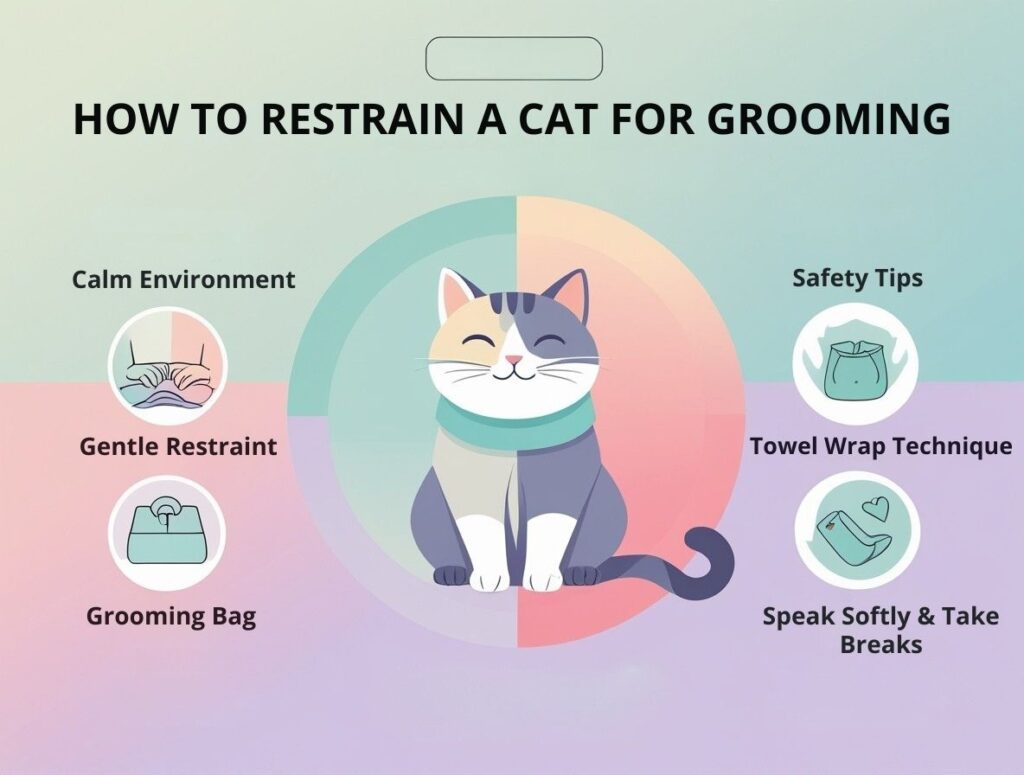
Towel Wrap (Burrito Method)
When to use it:
Use this if your cat fights nail trims or hates being touched. It’s great for scared or jumpy cats.
How to do it:
Lay a towel on a flat spot. Set your cat in the middle. Wrap one side over your cat. Then wrap the other side. Tuck the ends under. Keep your cat’s head out.
My story:
My long-haired cat, Saffy, used to fight every brush stroke. I tried the towel wrap. It worked! She stayed calm. I trimmed her nails for the first time with no drama.
Use a thick towel. It helps block claws and makes your hold feel firm but soft.
Holding Techniques (Scruffing vs. Gentle Restraint)
Why scruffing is risky:
Scruffing should not be a routine restraint method for grooming. Many veterinary professionals recommend using gentle handling techniques whenever possible because they are less stressful for most cats.
Try this instead:
Place one hand on your cat’s shoulders. Use the other to groom. Keep your tone soft. Move slow. Hold just firm enough to stop big moves.
What works for me:
I talk to my cats. I say, “Almost done,” or “Good job.” They hear my voice and relax. Calm hands and kind words go a long way.
Using Cat Bags or Grooming Bags
Never leave your cat unattended inside a grooming bag. Watch your cat’s breathing and body language throughout the grooming session. If your cat becomes overly stressed, stop and allow them to relax before trying again.
How they help:
These zip up around your cat. Openings let you reach paws or face. They stop your cat from moving or scratching.
When I use them:
If a towel fails or if my cat fights, I grab the bag. It’s fast, safe, and easy to use.
My win:
Max, my shy cat, hated nail trims. One day, I tried a grooming bag. He stayed still! I clipped all ten nails in minutes. No fuss. No fear.
The Help of a Second Person
Why is two better?
One person can hold your cat. The other grooms. It’s easier—and safer.
How to work as a team:
Hold the cat close but soft. Speak in low tones. Take breaks if needed. If one says “stop,” stop.
A moment I loved:
I asked my sister to help with Luna’s bath. She held the towel. I washed fast and calmly. Luna didn’t run. We laughed and called it a win.
These tricks helped me groom cats with less fear and more ease. You don’t need to force. You need care, calm, and the right steps. Try one. See how your cat reacts. Be kind, be patient and it gets better.
Types of Cat Restraints
Not every cat loves grooming. Some run. Some fight. Some give you the look. That’s why knowing the right tools can make a big difference. Let’s walk through the most common cat restraints. I’ll share what worked for me—and what didn’t.
| Restraint Method | Best For | Stress Level | Recommended |
|---|---|---|---|
| Towel Wrap | Nail trims | Low | ⭐⭐⭐⭐⭐ |
| Grooming Bag | Difficult cats | Medium | ⭐⭐⭐⭐ |
| Harness | Brushing | Low | ⭐⭐⭐⭐ |
| Gentle Hold | Calm cats | Very Low | ⭐⭐⭐⭐⭐ |
| Muzzle | Emergency only | High | ⭐⭐ |
Towel Wraps
A towel wrap is one of the safest, gentlest ways to keep your cat still.
Towel wraps, or the “cat burrito,” are my go-to for most grooming tasks. They work great for nail trims, brushing, or even eye cleaning. You wrap the cat in a towel, leaving only the part you need to work on—like a paw or the face—sticking out. The towel gives a cozy hug and keeps the claws tucked away.
Pros:
- Soft and simple
- Cheap—you probably already own one
- Keeps most cats calm
Cons:
- Doesn’t work on all cats
- Slippery if your cat wriggles a lot
My take: I use towel wraps almost every week. It’s the first thing I try with nervous cats. Luna, my rescue, calms down fast when she’s wrapped snug.
Cat Grooming Bags
These zip-up bags hold your cat in place so you can trim, brush, or clean without a chase.
Grooming bags are like little sleeping bags with zippers. Your cat’s head stays out, but you can reach their paws, tail, or belly through zip openings. I use this when the towel wrap fails. It’s quick, secure, and easy to carry.
Pros:
- Great for nail trims and tricky cats
- Offers good control without squeezing
- Most come with handles or openings
Cons:
- Some cats panic if zipped too fast
- Not ideal for long grooming sessions
Personal story: My shy cat, Max, once bit me during a nail trim. I tried the grooming bag next time, and boom—no drama. He stayed put, and I finished in five minutes.
Cat Muzzles and Elizabethan Collars
Quick answer: These stop biting or licking, but they don’t calm your cat—they just block the mouth.
Cat muzzles go over the face to stop bites, while Elizabethan collars (also called e-collars or cones) block licking and scratching. I rarely use them unless I really have to, like after surgery or if a cat is very aggressive.
Pros:
- Stops biting or licking wounds
- Can help with face or ear grooming
Cons:
- Stressful for many cats
- It can make things worse if your cat panics
My honest view: Use these only when there’s no other choice. They work, but they’re not kind unless the cat is already calm.
Cat Harnesses
A cat harness can help you guide or hold your cat without holding them too tightly.
Harnesses are soft straps that go around the chest and belly. They’re not for grooming alone, but they help when paired with another method. I sometimes use one with a towel wrap so the cat can’t slip out.
Pros:
- Gentle control
- Great for brushing or light grooming
- Useful for outdoor or leash-trained cats
Cons:
- Hard to put on a nervous cat
- Won’t stop bites or scratches
My tip: Try this on chill cats. It adds a little control without making them feel trapped.
My Go-To Combo
What works best for me? I start with a towel wrap. If the cat fights, I move to a grooming bag. I never force it. I watch my cat’s eyes, ears, and body. If she’s tense, I stop.
Less is more. Use the least restraint needed. The goal isn’t to trap your cat. It’s to help them feel safe while you care for them.
FAQs About Cat Restraint Techniques
Should I scruff my cat during grooming?
Scruffing is not recommended for routine grooming. Most cats respond better to gentle restraint, a towel wrap, or a grooming bag. These methods are less stressful and help build trust.
How long should a cat grooming session last?
Keep grooming sessions short, usually 5 to 15 minutes. If your cat becomes stressed, take a break and continue another day. Short sessions help your cat feel more comfortable over time.
Can I restrain an older cat the same way as a kitten?
Older cats may have arthritis or other health issues, so they need extra gentle handling. Support their body well and avoid positions that cause pain. If you’re unsure, ask your veterinarian for advice.
What should I do if my cat keeps trying to escape during grooming?
Stop for a few minutes and let your cat relax. Offer treats, speak softly, and try again later. Never chase or force your cat, as this can increase fear and make future grooming more difficult.
Is it okay to use treats during grooming?
Yes. Treats are a great way to reward calm behavior and create positive experiences. Giving treats before and after grooming helps many cats become more comfortable with regular grooming sessions.
When should I ask a professional groomer for help?
If your cat becomes aggressive, has severe mats, or cannot be groomed safely at home, it’s best to contact a professional groomer. They have the training and equipment to handle difficult grooming situations safely.
How often should I groom my cat?
Most short-haired cats benefit from brushing once or twice a week. Long-haired cats usually need grooming several times a week or even daily to prevent tangles and mats.
Final Thoughts
Learning how to restrain a cat for grooming gets easier with time. Each cat is different, so stay calm and use a soft touch. A towel wrap, gentle hold, or grooming bag can help keep your cat safe. Watch your cat’s body. If your cat looks scared or upset, stop and try again later. Keep each grooming session short and end with praise or a treat.
Never force your cat to stay still. Fear can lead to bites or scratches. Let your cat rest if they seem stressed. If your cat has thick mats, gets very upset, or cannot be groomed at home, ask a professional groomer or your vet for help. Your cat’s safety should always come first.
With care and patience, grooming can become a good habit. Small steps build trust. Soon, your cat may stay calm from start to finish. A safe and happy grooming routine helps keep your cat clean, healthy, and comfortable.
More Tips About pets