
I still remember the first time I saw my two male cats grooming each other. It looked so sweet. They licked each other’s faces and purred like old friends. But then, out of nowhere, they started to fight. I sat there, confused, asking myself, why do my male cats lick each other and then fight?
Over time, I learned that this behavior isn’t strange at all. It’s how cats show trust, affection, and sometimes a little dominance. Even neutered male cats grooming each other do it to feel close and safe.
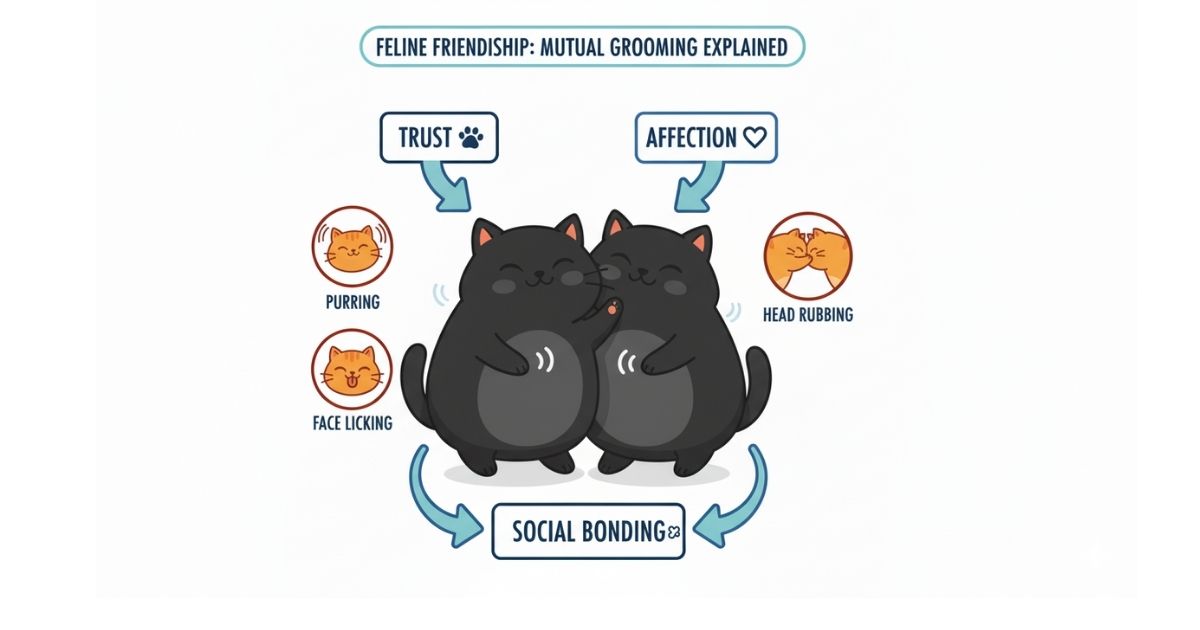
As someone who’s lived with cats for years, I’ve seen how these moments tell us a lot about their bond. In this guide, I’ll share what I’ve learned about why cats groom each other, when it turns into conflict, and how to treat it if needed. Let’s find out together.
What Is Allogrooming in Cats?
Allogrooming means one cat grooming another. It’s a normal part of cat life and a big way they show trust and care. When male cats groom each other, they are not just cleaning — they are building a bond. It helps them stay calm, friendly, and safe in their shared space.
You might see your cats licking faces, ears, or necks. Sometimes, they nibble softly or rub heads while purring. Both neutered and intact male cats do this when they feel close. The cat that starts the grooming is often the more confident one, while the other simply enjoys it.
In short, allogrooming is social grooming between cats that shows affection and respect. A study in animal behavior found cats groom most when they trust each other. It’s their quiet way of saying, “You’re part of my family.
Typical allogrooming behaviors include:
- Licking the face, ears, or neck
- Nibbling around the head or shoulders
- Gentle paw touching or head rubbing
- Short grooming sessions followed by resting together
Why Do My Male Cats Lick Each Other and Then Fight?
Male cats lick each other to show care or trust. But too much licking or mixed signals can cause stress and lead to a sudden fight.
I’ve seen this often with my cats, Jon and Rov. They start by grooming each other’s faces, purring like old friends. Then, out of nowhere, they swat and chase each other across the room. It looks wild, but it’s not hate, it’s just cat talk gone wrong.
Cats groom to bond. It’s their way to say, “You’re part of my group.” But when one cat gets too excited or reads a cue the wrong way, the calm moment can flip fast. Think of it like a hug that lasts too long — sweet, then awkward.
Common Triggers Behind Grooming-Fight Behavior
Overstimulation or Misread Cues
A cat may enjoy grooming at first. But if it lasts too long, it feels annoying. One bite or twitch says, “Enough!” and that’s when the fight starts.
Competing for Dominance or Territory
Even friendly male cats sometimes test who’s boss. The one who grooms first might be trying to lead. If the other cat doesn’t like that, tension builds.
Hormonal Influence (If Not Neutered)
Cats with hormones still active can be touchy. A small act of care may turn into a show of control. Neutering often helps calm this down.
Personality Differences
Just like people, cats have moods. One may be calm, the other playful. When they mix signals, what starts as love can turn into a small clash.
My Experience and How I Fixed It
When Jon and Rov began these sudden fights, I watched their signs. If one’s tail twitched or ears pulled back, I stepped in fast. I’d toss a toy or make a soft sound to break the tension.
Here’s what helped:
- Give space. Two beds, two boxes, no fights.
- Keep play short. Stop before they get wired.
- Use calm scents. Cat pheromones work wonders.
- Reward peace. Treats when they rest near each other.
Now, they still groom, but fights are rare. I learned that cat fights after grooming aren’t mean — they’re just about comfort and limits. Once you see the signs, you can help them live in peace.
Do Cats Groom Each Other to Show Dominance?
Yes, sometimes cats groom each other to show dominance. It’s their calm way of saying, “I’m the boss here,” especially when one cat does most of the licking.
I’ve seen this with my cats, Jon and Rov. When Jon licks Rov, it looks loving at first. But Jon keeps control. Rov stays still, eyes half-closed, letting it happen. That’s not just care — it’s quiet power. Cats use grooming to build peace and order in their group. It keeps tension low and roles clear. Experts say this is normal. It’s not aggression, just feline balance.
Signs It’s Dominance, Not Affection
You can spot dominance grooming with a few clues:
One-sided licking: One cat grooms, the other accepts.
Pinned posture: The groomer holds the other down gently.
Swat or hiss after: The calm breaks when the lower cat resists.
These signs show rank, not hate. It’s cat politics — simple, soft, and short-lived.
Neutered Male Cats Grooming Each Other. Is It Normal?
Yes. Neutered male cats grooming each other is normal. It shows trust, comfort, and bonding.
After neutering my two cats, Jon and Rov, I saw a big change. They stopped fighting as much. Now they sit together, lick each other’s ears, and nap side by side. It’s calm and peaceful.
Neutering lowers hormones that cause stress or territory fights. Without that tension, cats feel safer. Grooming becomes a way to connect. They share scent, show friendship, and help each other relax.
If your neutered male cats groom often, it means they feel secure. This is most common in cats that grew up together. It’s their quiet way of saying, “You are family.”
At Doctor Groomer, I’ve learned that grooming is not just cleaning. It’s a small act of love and trust between cats.
When Male Cats Grooming Each Other Might Need Attention
Most grooming is fine. But too much can mean stress or health problems.
I noticed my cats, Jon and Rov, sometimes over-groom. One cat lost fur in a small spot. The other hissed after a long grooming session. That’s a sign something is wrong.
Watch for these signs:
- Hair loss or bald patches
- Red or sore skin
- Avoiding each other after grooming
- Sudden aggression or hiding
If you see these, help your cats. Too much grooming can mean stress, boredom, or health issues.
Male Cats Grooming Care Tips
Here’s what worked for me:
Give space: Separate beds, litter boxes, and feeding areas.
Reward calm moments: Treats or gentle pets when they groom gently.
Check health: Visit the vet to rule out skin or hormone problems.
Use pheromones: Diffusers help cats feel safe and calm.
Small steps can bring peace back. Grooming can stay loving and safe.
Building Better Bonds Between Male Cats
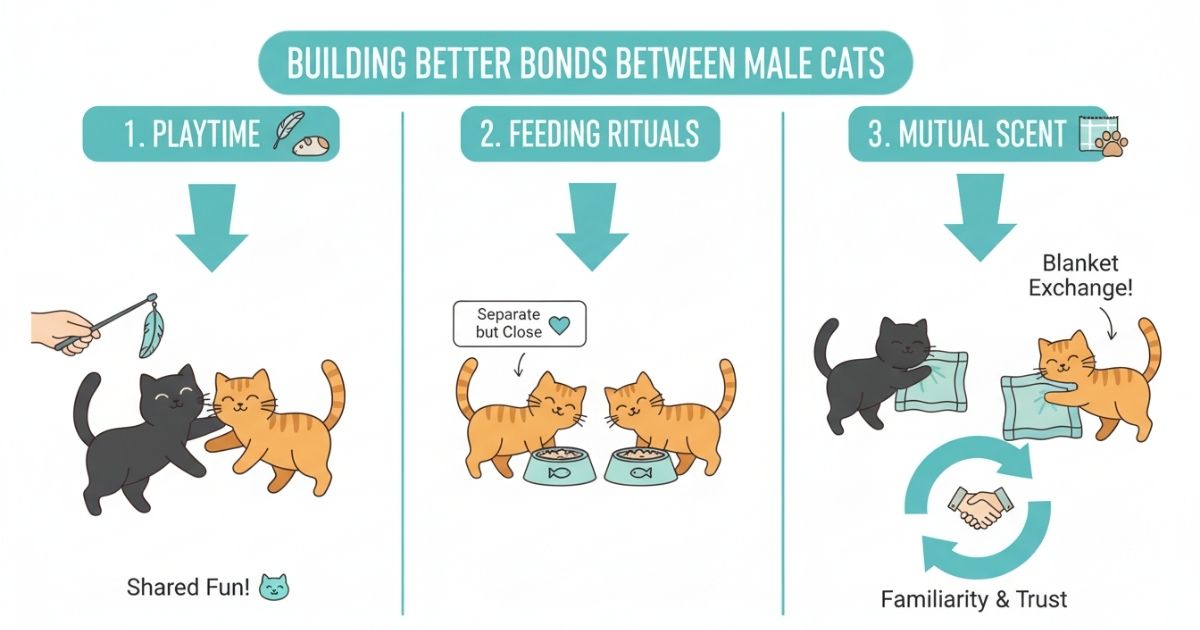
Building a strong bond between male cats takes time and patience. I’ve seen my two cats, Jon and Rov, go from ignoring each other to sitting side by side while grooming. Start with short play sessions using toys they both like. Feed them near each other, but give enough space so neither feels trapped. Swapping blankets or rubbing them with the same towel helps share scents and calm tension. Watch their body language closely, ears, tails, and posture tell you if they are comfortable.
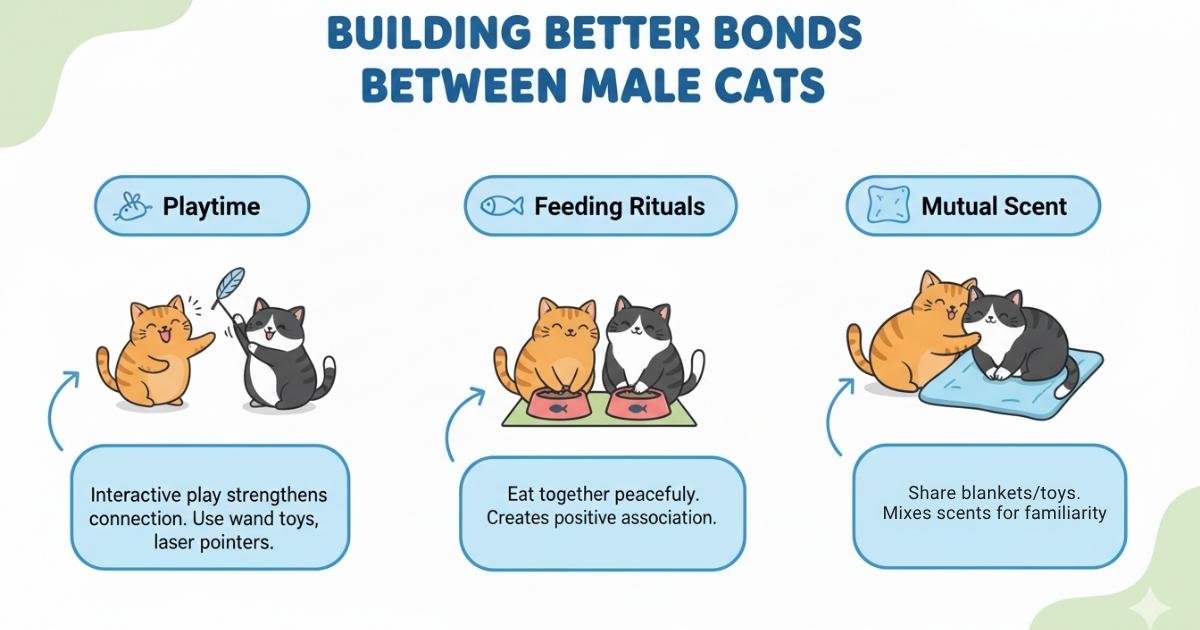
Reward calm behavior with treats or gentle petting. Avoid forcing interactions. Over time, these small steps help your cats trust each other more. At Doctor Groomer, I’ve learned that cats communicate quietly. Observing them carefully prevents fights and strengthens friendships. Grooming, play, and shared routines become safer and more enjoyable.
FAQ
Why do male cats groom each other’s heads?
Male cats groom heads to show trust. It is a sign of care, comfort, and friendship between cats.
Is it okay if my male cats groom each other constantly?
Yes. Grooming is normal if it does not cause bald spots, skin irritation, or stress.
Do male cats groom each other only if they like one another?
Mostly yes. Cats groom to show love, trust, and comfort, though mild dominance may appear sometimes.
Should I separate male cats when they fight after grooming?
Only briefly. Let them calm down, then bring them together again to keep their bond safe.
Can neutered male cats still groom each other?
Yes. Neutered male cats groom to bond, share scent, and feel safe, just like intact cats.
What does it mean if grooming leads to a fight?
It can show overstimulation, misread cues, or dominance tests. Watch body language to stop fights early.
Final Thoughts
Watching male cats groom each other is very calm and sweet. Each lick shows trust or care. Sometimes it also shows who is in charge. I have two cats, Jon and Rov. I watch them sit side by side and lick each other. They purr and look happy. When one cat swats or hisses, I give them space. It stops fights fast. Grooming is not just cleaning. It is a way cats feel safe. They share scent and show love. I give treats when they stay calm together. I play with them in short sessions to keep them happy. I swap blankets to share scents. I never force them to meet. Over time, they trust each other more. Every lick is small, but it tells a lot about their friendship and balance.